Measure the timing that matters
Define task priorities, deadlines, interrupt response and resource budgets, then measure behavior on the selected processor, board, drivers and representative workload.
ESL OS RT / Real-Time Platform
ESL OS RT brings real-time operating-system integration, board support, timing analysis and security lifecycle planning together around your product requirements and target hardware.
Discuss an ESL OS RT project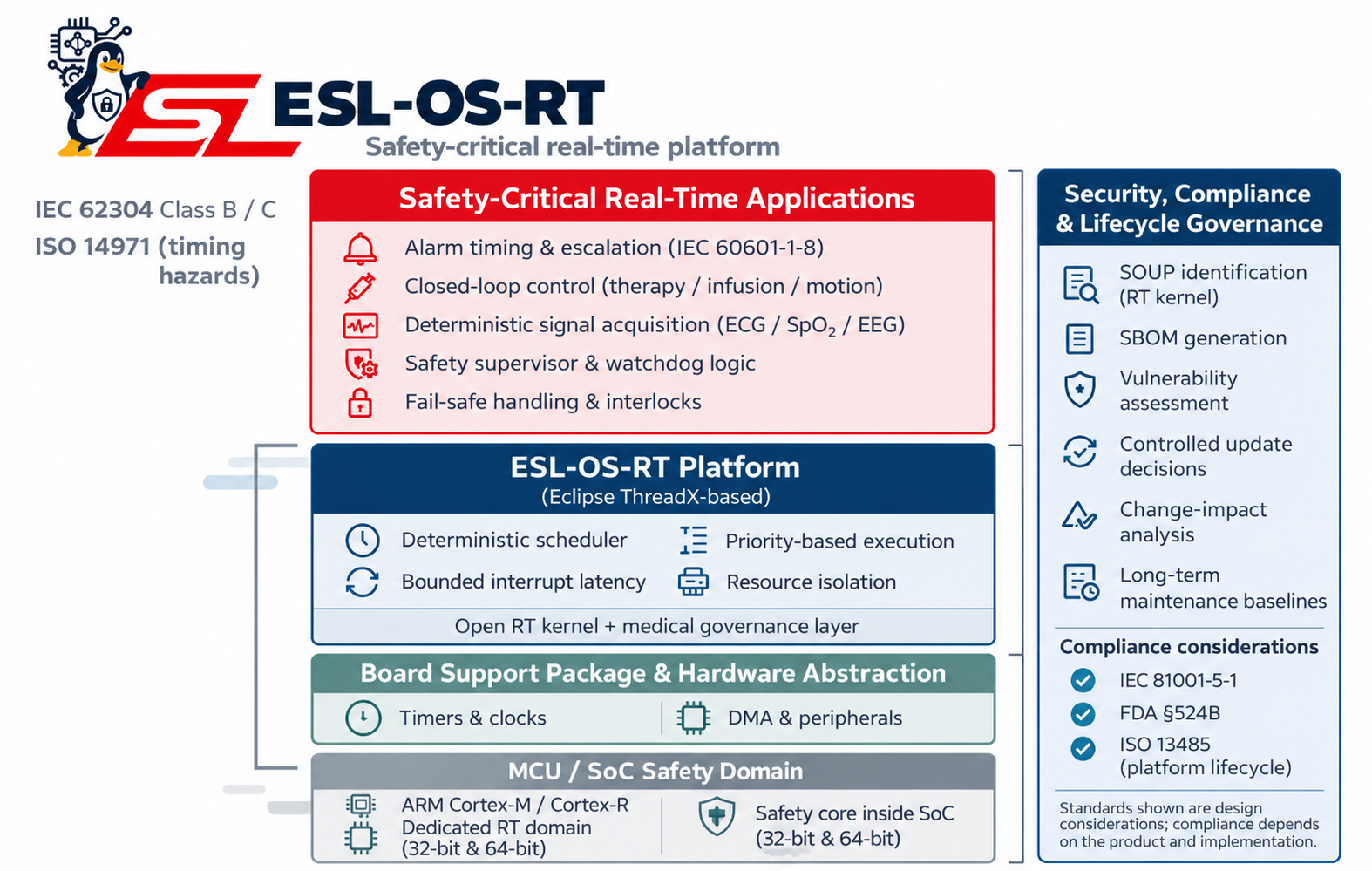
Timing, boundaries and lifecycle
Real-time behavior and safety assurance depend on the complete system, not the kernel alone. ESL works with product teams to connect application timing, hardware capabilities, failure handling, verification and maintenance into a scoped engineering plan.
Define task priorities, deadlines, interrupt response and resource budgets, then measure behavior on the selected processor, board, drivers and representative workload.
Assess watchdogs, interlocks, supervisory logic, recovery paths and hardware or software separation against the product hazard analysis and system safety concept.
Plan component inventory, SBOM generation, vulnerability assessment, controlled update decisions and change-impact review as part of product maintenance.
Agree on timing targets, safety constraints, hardware, interfaces, applicable standards and evidence expectations.
Integrate the selected RT kernel, board support, drivers, application interfaces and security controls for the target.
Validate timing, fault handling, updates and release artifacts on representative hardware, with results traceable to agreed requirements.
Planning a deterministic or safety-focused embedded system?
Talk with ESLESL OS RT / Assurance planning
Start with the product’s intended use, hazards, threat model and market requirements. Map platform engineering, verification, change control and maintenance evidence to the manufacturer’s development and regulatory processes.
Identify product risks, safety boundaries, security goals, timing constraints and the responsibilities of the manufacturer and engineering partners.
Plan target-level timing, interface, fault-response and regression tests. Record results and limitations against the agreed system requirements.
Track platform components, vulnerability dispositions, update decisions and change impact across maintenance releases and the product’s support plan.
Depending on product, market and intended use, project inputs may include IEC 62304, IEC 60601-1-8, IEC 81001-5-1, ISO 14971, ISO 13485 or applicable regulatory guidance. These are considerations for project scoping, not a claim that ESL OS RT is certified, compliant, or approved. The manufacturer owns regulatory determinations and product conformity.